

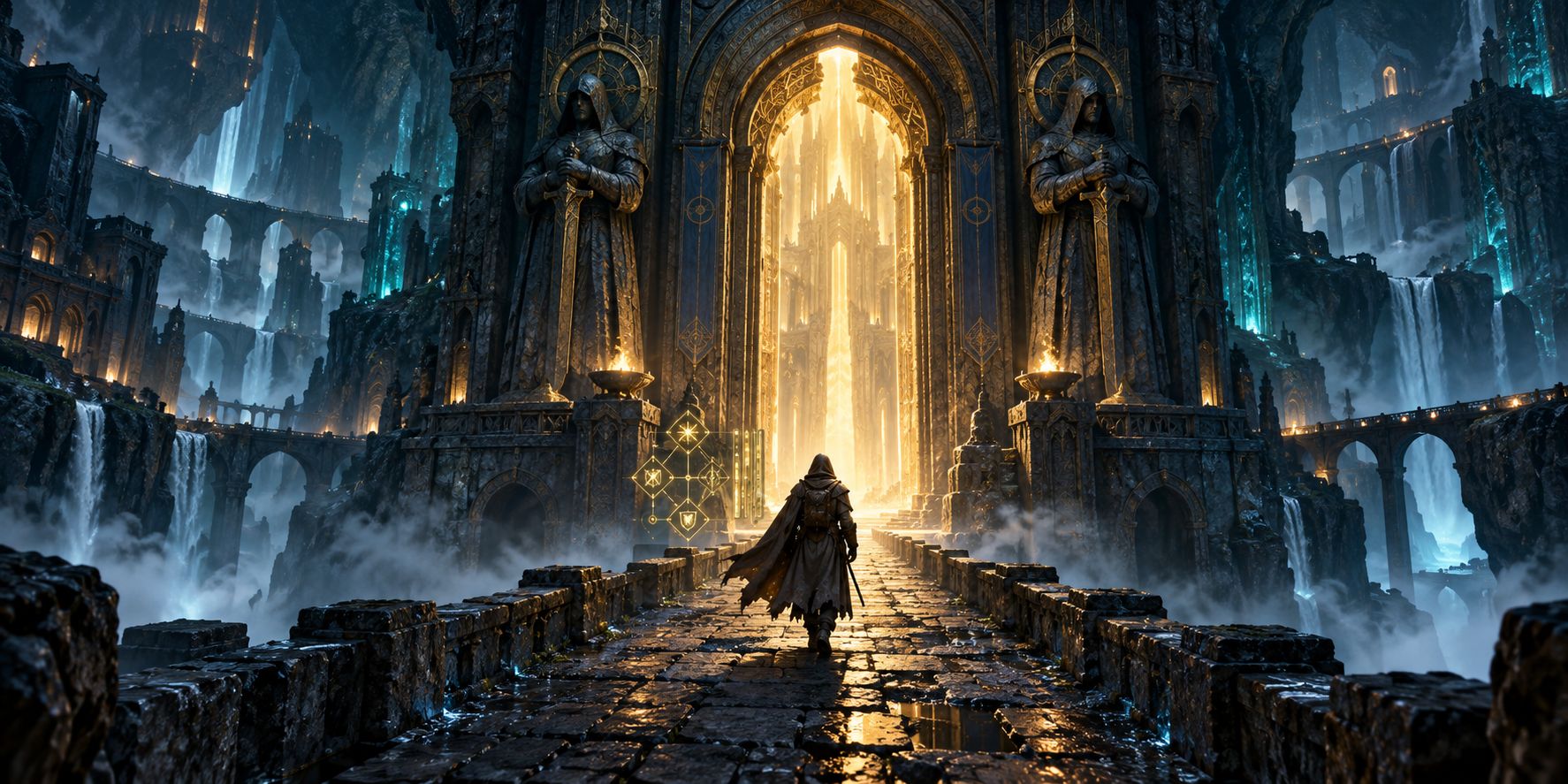
An unlikely hero enters a world with unfamiliar rules. Every decision carries a cost. Progress brings new abilities, but also more dangerous problems.
It is a compelling foundation for a novel—and, increasingly, a meeting point between books and gaming.
LitRPG has been attracting fresh attention beyond its established readership. On 30 September 2026, The Atlantic examined the genre through the success of Dungeon Crawler Carl, Matt Dinniman’s series that began in self-publishing. For independent authors, that attention raises an interesting question: what can a story built around dungeon levels and game mechanics teach us about publishing books?
Quite a lot, even if your next novel contains neither a dungeon nor a single experience point.
What is LitRPG?
LitRPG stands for literary role-playing game. It combines storytelling with recognisable game systems: character statistics, levels, quests, skill development, equipment and rewards. Those systems influence what characters can do and how they survive.
Imagine a fantasy heroine learning to control fire. In a conventional fantasy novel, her growing ability might emerge through training and experience. In a LitRPG story, she might also unlock a named skill, spend a limited resource to use it or discover that improving one ability prevents her from choosing another.
The mechanics become part of the drama.
The genre overlaps with progression fantasy, which centres on characters developing their capabilities. However, progression fantasy does not necessarily make that development visible through levels, statistics or game interfaces. Nor does a story become LitRPG simply because it features a quest or takes place inside a game.
For authors, that distinction matters. A genre label is a promise about the reading experience, and readers will notice whether the story fulfils it.
Why Dungeon Crawler Carl makes an interesting case
The premise is deliberately unusual. Carl and a cat named Princess Donut face an alien-controlled dungeon that doubles as an intergalactic entertainment spectacle. Survival depends on navigating both its dangers and the demands of an audience. Dinniman’s official book page records the first book’s publication in September 2020 and republication in August 2024; Penguin Random House lists the latter edition under its Ace imprint.
The self-publishing background is significant. This is a useful example of an unconventional concept finding readers before receiving wider publishing support. It is also an exceptional success, not a forecast of what another author will earn.
Rather than treating the series as a recipe, we can use the interest surrounding it to examine our own decisions about storytelling and presentation.
Give readers a premise they can pass on
An author may spend years constructing a fictional world, then struggle to explain the book in two sentences. That gap can make promotion unnecessarily difficult.
A useful premise gives a prospective reader someone to follow, a problem to understand and a reason to feel curious. It need not explain the history of three kingdoms or introduce every major character.
Consider this invented example:
A disgraced cartographer must redraw a living labyrinth before its shifting corridors erase the town where her daughter is trapped.
We can understand the central conflict without knowing the names of its gods or the rules of its magic. There is enough specificity to remember, and enough uncertainty to invite a question.
Try describing your own novel in that way. Then compare the sentence with your book description and opening pages. If each seems to promise a different story, the presentation may need attention.
This is particularly useful when preparing a cover brief. The designer needs to understand the experience you are selling, not illustrate every event in the manuscript.
Make progress change the story
LitRPG makes advancement unusually visible. A character acquires a skill, completes a challenge or reaches a new level. But visible progress becomes more satisfying when it changes the choices available.
Return to our cartographer. Suppose she gains the ability to freeze one corridor in place. That sounds helpful—until she discovers that fixing her own escape route will close someone else’s.
Now the new ability creates a decision with emotional weight.
Writers in other genres can apply the same principle. A detective’s discovery should alter the investigation. A spaceship captain’s promotion might create responsibility for people she once considered expendable. An apprentice’s new spell could expose a belief he has never questioned.
During revision, look at each major success and ask what becomes possible, what becomes harder and who is affected. If the answer is merely that the next opponent is stronger, there may be an opportunity to deepen the story.
Create discussion through choices
When readers disagree about a character’s decision, they have something to discuss beyond whether they liked the book.
A detailed world can support that discussion, but detail alone does not guarantee it. An elaborate map may interest readers; a disputed border that forces a beloved character to choose sides gives them something to care about.
For a fantasy or science-fiction author, useful discussion prompts can come directly from the work:
- Which promise should the protagonist have broken?
- Would you accept the gift if you knew its cost?
- Which character understood the danger first?
Use questions like these after readers have had a chance to encounter the relevant story, and clearly mark spoilers. A small, thoughtful conversation can teach you more about what connects with readers than a post that only asks them to buy.
Their responses are information, not instructions. You can learn that a relationship matters deeply to readers while still making your own creative decisions about its future.
Choose a publishing rhythm you can sustain
The appeal of ongoing adventures makes serial fiction worth considering. Dinniman’s early publication of chapters on Royal Road is described in Written Word Media’s account of the series’ development.
However, serial publication changes the work involved. You need to think about episode endings, continuity, a publication schedule and how much revision you can comfortably do once readers have seen earlier chapters.
Before announcing a schedule, time how long it takes to draft and revise several instalments. Build a buffer that fits that pace. Decide how you will communicate a break before you need one.
If your book depends on substantial structural revisions, finishing the manuscript before sharing it may suit you better.
Platform choices also need to fit together. Amazon’s KDP Select information states that enrolled books must be digitally exclusive to KDP during the enrolment period, including restrictions on distribution through websites and blogs. Check the current terms before combining an online serial with KDP Select.
Consider how the book will sound
Dinniman’s official site offers both audiobook and immersive-audio editions. Their presence is a useful reminder to consider how a story works when someone hears it rather than reads it.
That matters particularly when a manuscript contains statistics, inventories, system notifications or invented terminology. A table that is easy to scan on a page may feel slow when spoken aloud.
Read a representative scene aloud during revision. Notice repeated information, confusing names and interruptions that weaken the momentum. Ask whether a listener could follow the action without seeing the page.
This exercise is useful even if an audiobook is a future possibility. When you do consider production, base the decision on your audience, available budget and actual production quotes. A successful audio edition of another author’s book cannot establish the likely return on yours.
Borrow the questions, then write your own book
Interest in LitRPG does not mean every fantasy writer should add character statistics to a manuscript. Readers who enjoy the genre deserve authors who understand its pleasures, conventions and variations.
If you want to write it, read widely within it. Explore different approaches to progression, humour, combat and relationships. Notice which ones engage you enough to sustain a whole writing project.
If you prefer another genre, there is still plenty to take away. Test whether your premise is memorable. Give achievements consequences. Consider what readers will want to discuss. Choose a publishing schedule that leaves room for good work.
The next useful step might be modest: rewrite a muddled description, strengthen a turning point or ask early readers where their attention slipped. Those are decisions you can act on now, whatever happens to the next publishing trend.
Looking for more practical guidance on publishing and reaching readers? Explore the Rogghorn Press Self-Publishing Studio.